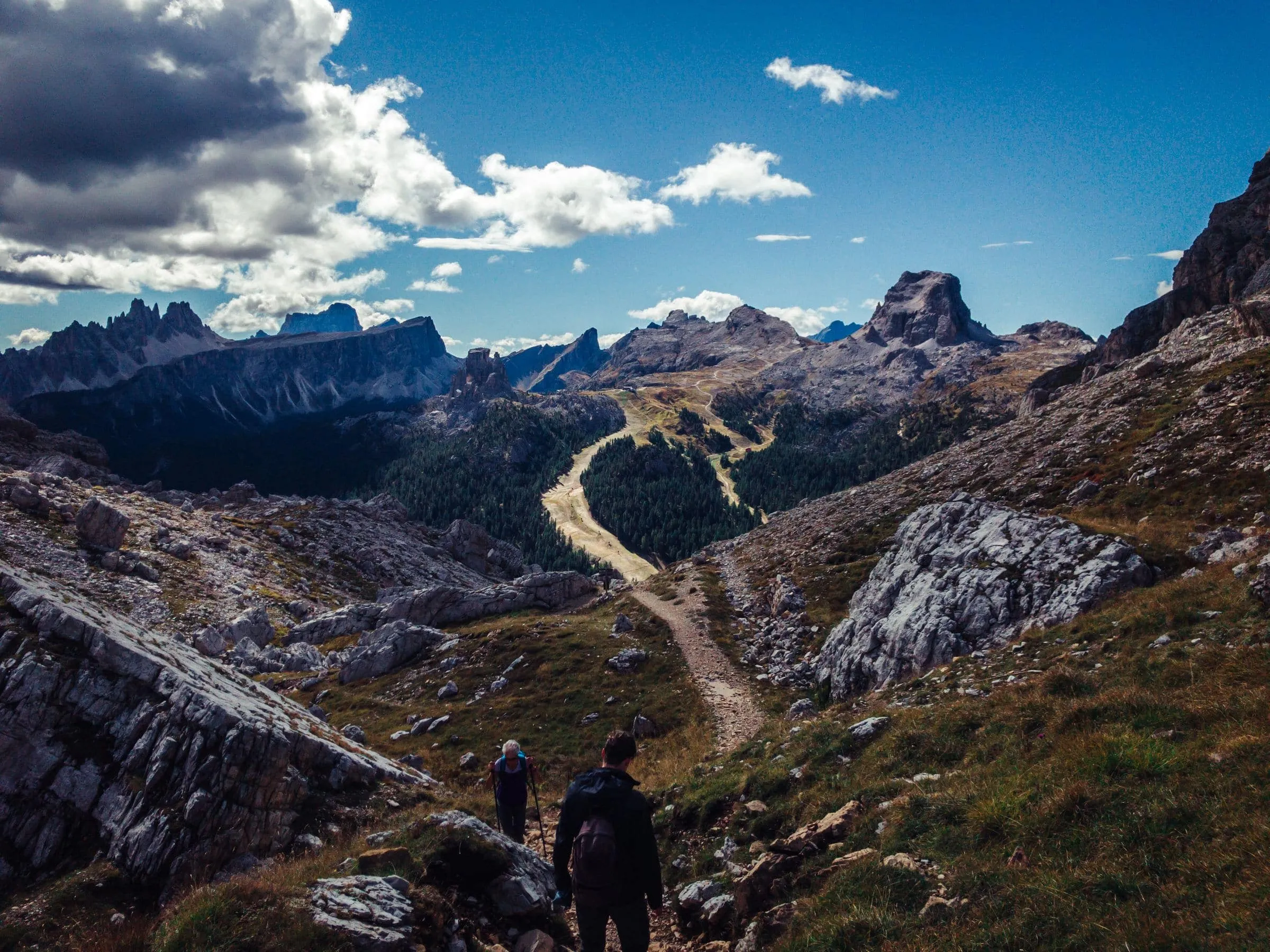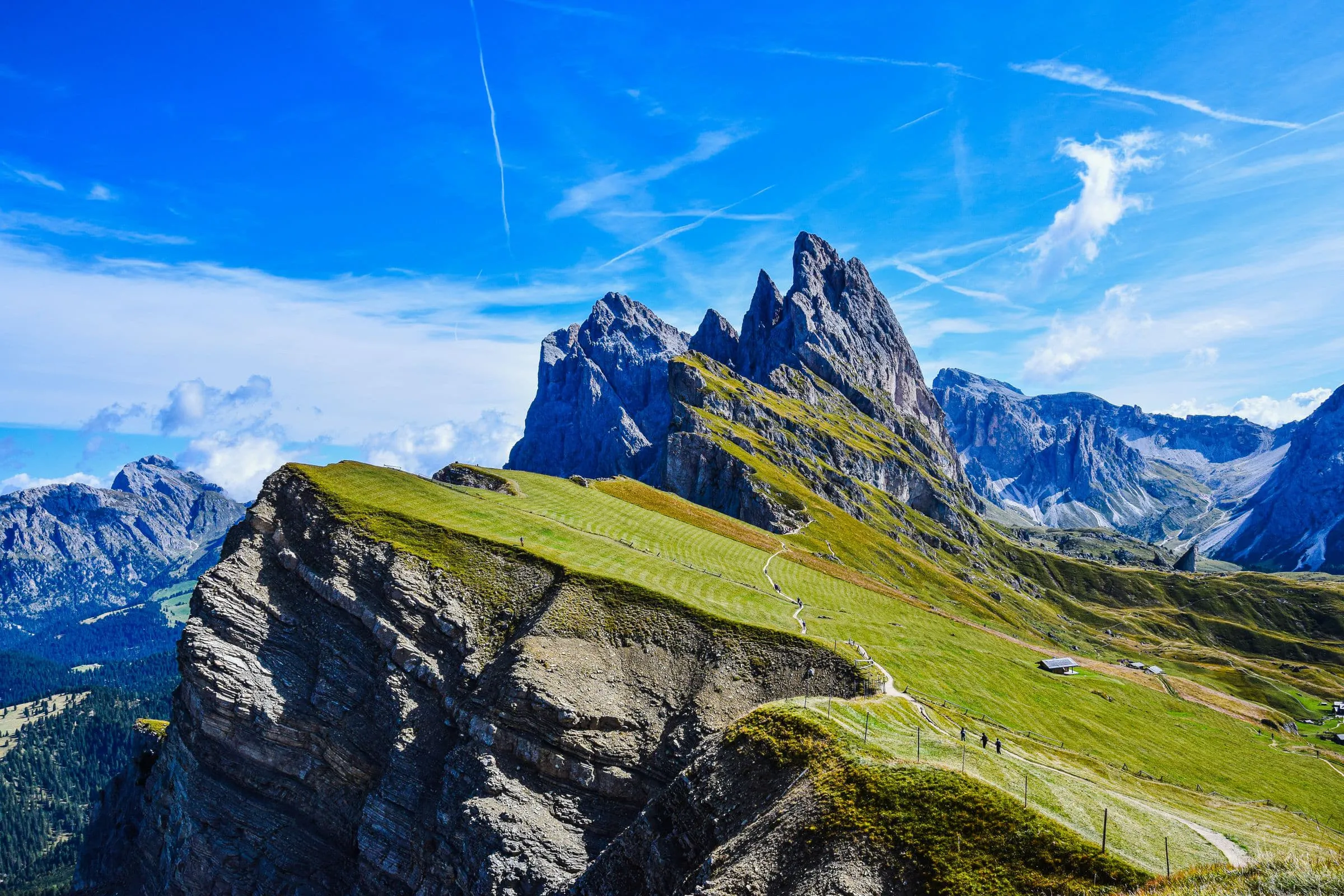
The thing that stops most people walking in the Alps is the camping. Carrying a tent, a stove and four days of food over a pass is a different sport from walking, and it is the sport people imagine when they say they could never do it.
You do not have to. The Dolomites are covered in rifugi — mountain huts with bunks, showers and a kitchen — spaced roughly a day’s walk apart. You carry a sleeping bag liner, a change of clothes and a waterproof. That is it.
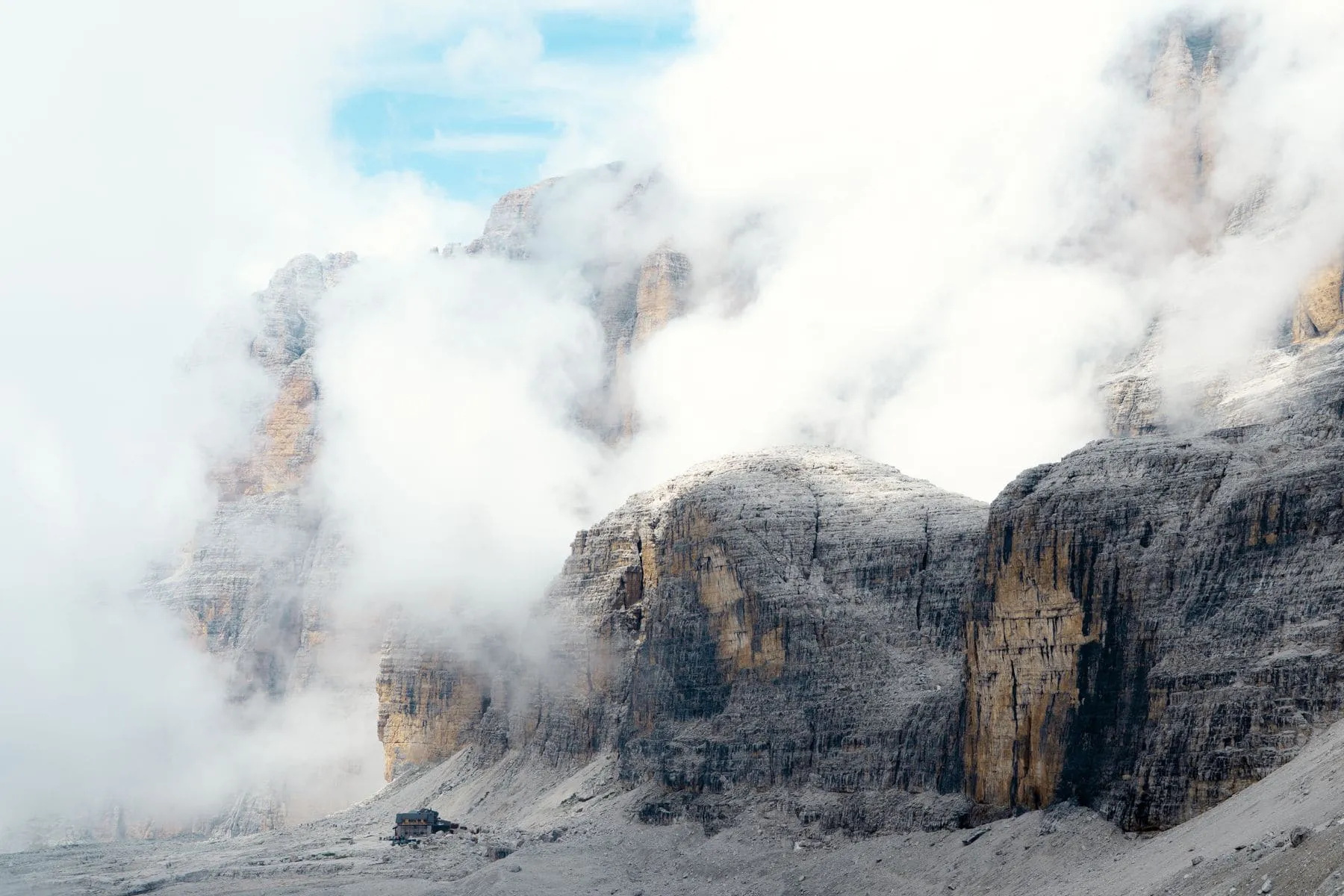
The second morning, an hour after leaving the hut and about twenty minutes before the cloud lifted. Photo: Nicola Toscan.
Three days that work
- Day one: up from the valley, four hours, mostly forest. Dull, and it gets the height done.
- Day two: the long one. Six to seven hours along the ridge, and the reason you came.
- Day three: down, three hours, knees complaining, bus at the bottom.
A hut is not a hotel and it is not a bothy. It is a busy restaurant with beds above it, at two thousand metres, and the strangeness of that never quite wears off.
Booking and manners
Book by email, weeks ahead, and confirm. Bring cash, because the card machine is at the mercy of a radio link. Take your boots off at the door, take the top bunk if you are the last to arrive, and be in bed by ten — everybody around you is leaving at six.